Peter Yells

70105 CD33

The Yells building firm was established in Fairford in 1858. At first the work was mainly agricultural repairs but in the 20th century building houses became the main work. They built a huge number of properties in the area including Burdocks and Palmer Hall. They worked at The Retreat for Dr A C King-Turner, Palmer Hall and flourished during the building boom after the war. Peter Yells show many pictures and examples of stationery that his firm used.

Fairford Medical practices

70104 CD32

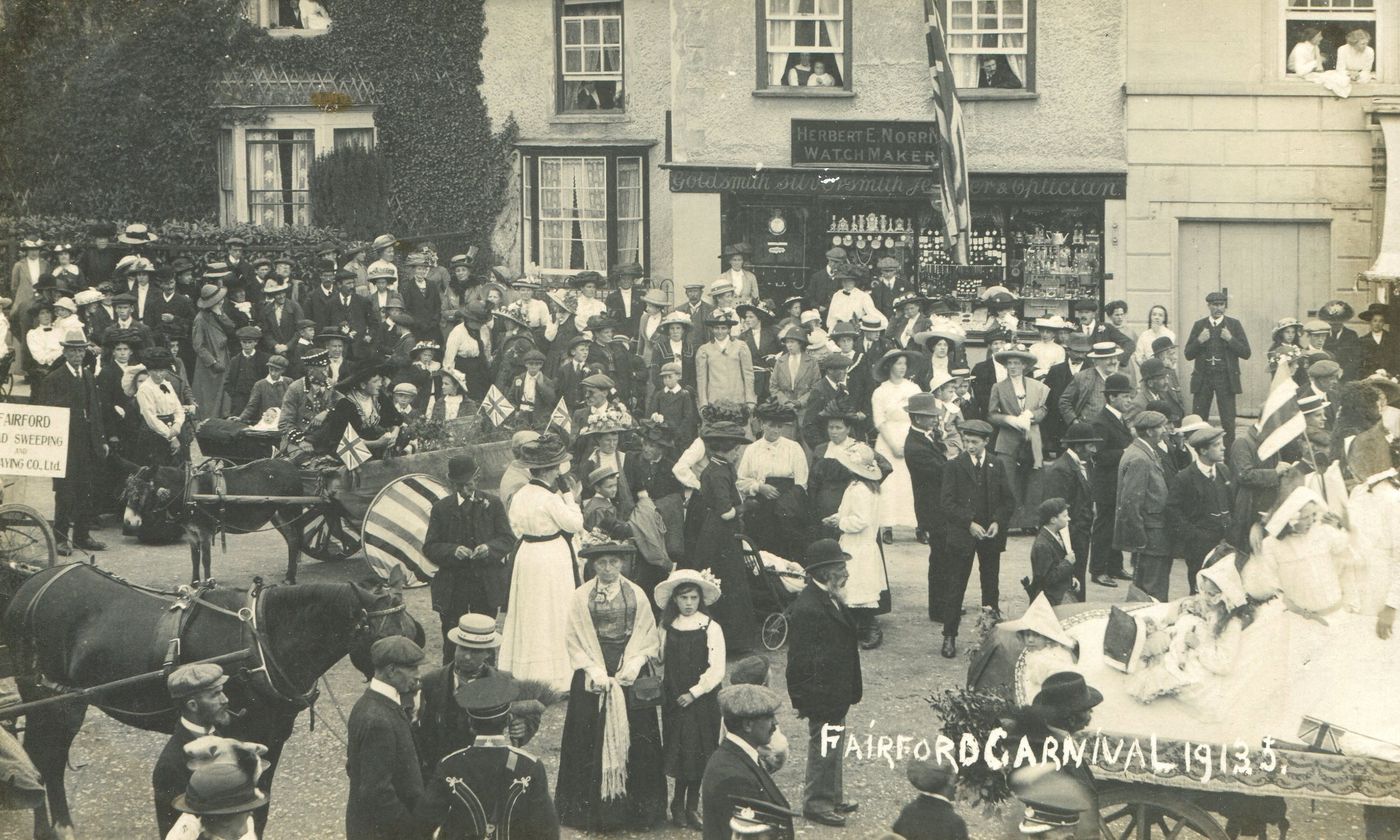
At the FHS meeting on November 16th June Lewis-Jones took a look at medical practices in the town over the centuries. She included the Fairford workhouse, the Retreat (Fairford Lunatic Asylum), the doctors Bloxsome at Croft House, the Pharmacy, Fairford Hospital and Carnival, Nurse Davis and the doctors of Hilary Cottage Surgery.

Victorian Fairford – A snapshot of Fairford in the 19th Century

60247 CD27

Chris Hobson outlined the research tools that were used to search about this topic at his talk on September 21st, 2006 :- censuses, trade directories, the Times Digital Archive, National Burial Index and the Internet were all cited. He went into in some detail about the population growth of the town (also see historical Topics) and also covered the railway, medical practices in the town, the Cowley family and also told the Society about the family database he is setting up which will be a very useful family history tool.

Medieval pilgrims in Gloucestershire

60246 CD26

Tim Porter gave a talk to the Fairford U3A, July 4th 2006, illustrated with slides. Tim trained as a musician, but has always studied history as well.

Pilgrim routes date from the Roman times. In this area the main route was from Cirencester (the largest town after London) to Bath (Aquae Sulis) along the Fosse Way to visit the hot springs. There was also a 4th century Roman temple now in Lydney Park above the River Severn, so the basis for the pilgrim routes along the Roman roads and by water on the River Severn were in existence by medieval times. Tim told the story of St Kenelm (son of King Cenwulf of Mercia who was murdered by his stepsister at a young age near Romsley, Worcs. The Winchcombe monks brought the body back to Winchcombe (a main residence of King Cenwulf) where a shrine was made. The route from Romsley to Winchcombe and then a few miles to Hailes Abbey became a pilgrim route. Wayside shrines and wells were built for places of rest, Tim gave examples.

Schools: Derrick Youngs, Hugh Dudley and David Pitts

60245 CD25

Derrick Youngs was head of technical studies at Farmor’s from 1971-1992 and talks about his time as teacher at the School, starting in a newly-built department. Hugh Dudley also started in 1971 is now deputy head teacher, Dave Pitts was a technical assistant at the school. They all talk the about various aspects of school life, Hugh Dudley includes the history.

Hugh Dudley
Derrick Youngs

Fairford at War and Schools by June Lewis-Jones

60244 CD24

June covers the topic of her schooldays and working life at Farmor’s School. At her entertaining and informative talk to the Fairford History Society on September 25th, 2005 June describes what Fairford was like during the war. The topics of evacuees, communications, air raids, St Mary’s Church windows, rationing, pests, savings, fund raising, fire fighting, the Home Guard, the railway, RAF Fairford and the secret services were all covered.

Liz & Phil Hope, Peter Egerton, Tony Rodgers

60243 CD23

Liz and Phil talks about their early life and childhood (Phil used to live in the George Hotel and Liz at Waiten Hill Farm), the war years and their experiences in the shop in the High St for 20 years.

Liz and Phil Hope

Peter talks about the school and life as a boy during the war, Fairford Carnival and shops in the town.

Tony Rogers talks about his experiences, how he got to England from Poland which includes his terrible experiences in Russia. He trained as a pilot, completed many operations and became an instructor, and flew many types of aircraft. When the war finished he stayed in England and in 1947 joined the RAF. He recounts his post war flying experiences in the Far East, his work at Lucas Aerospace, as liaison officer in Birmingham. In June 1993 he retired to Fairford.

Tony Rodgers

Geoff & Mary Chick, Gillian Bilbrough, Jos Barker

60168 CD20

Geoff with his wife Mary came from London to work in Fairford as a youth worker. They talk about their experiences living in the Youth Warden flat in the Community Centre and all the activities for the young people in Fairford in the 70s-80s and what Fairford was like in those days.

Geoff Chick

Gillian moved to Fairford in 1967, Harry taught at Farmor’s School, they first lived in Victory Villas, Hatherop Rd. She talks about what it was like living with a young family in the 1960s and 1970s.

Gillian Bilborough

Jos Barker talks about shops and people in Fairford in the years 1918-26.

Betty Cook

60166/60167 CDs 18/19

Betty has lived in Fairford all her life. She covers the topics of Fairford Primary School, Farmor’s School, working on the railway 1942-1949 and at the Primary School for 34 years. Fairford Carnival and shops are also covered.

Audrey Cowley, Jean Bennett, Kathleen Price, Peter Egerton

60165 CD17

Audrey talks about her life at the Fairford Park estate, the carnival and characters in Fairford. Jean talks about the schools and life during the war and the railway. Kathleen and Liz Morecambe talk about Mr Dipper at the Primary School. Peter talks about the school and life as a boy during the war, Fairford Carnival and shops in the town.